
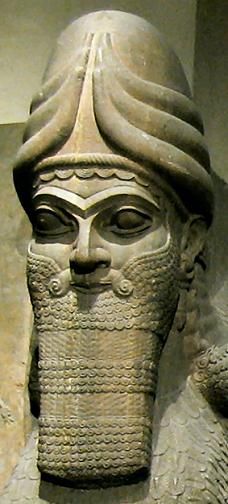
In the land of Shinar, Nimrod his name.
Most likely under his strict direction
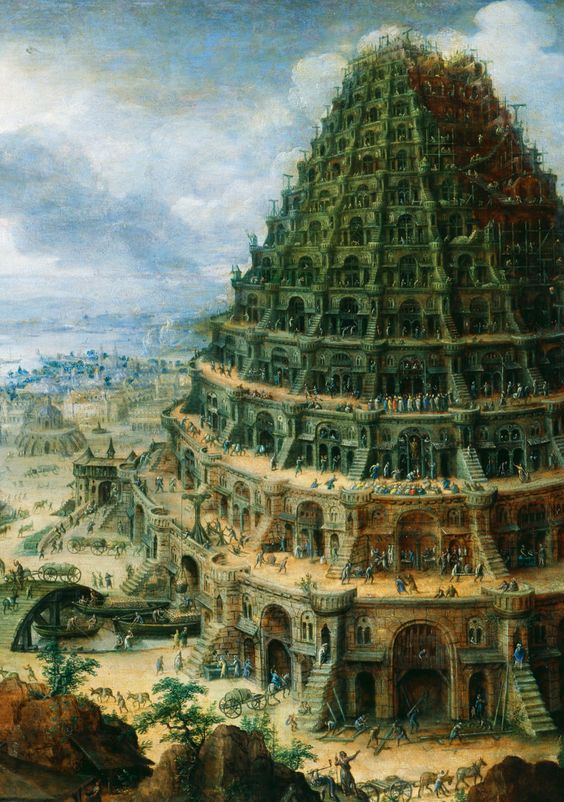
a tower they built; then famous became
rebelling against Godly submission.
Wrote Josephus: “Nimrod transformed… affairs.”
Threatened revenge, if earth inundated.
Tyranny his tool as arrogant airs
against Almighty God he instigated.
The Tower of Babel built to rise high
above any destructive waters planned.
No more as slaves. Determined not to die.
Eager to construct a building God banned.
Nimrod. Son of Cush. A mighty hunter.
But in the end, who hears his thunder?
Today, rebellion’s worldwide promoted
as in Shinar, false worship restarted.
God’s sovereignty hated and demoted
as false religion plays its shameful part.
“A celebrated name” their goal to share.
Self-glorification–sad selfishness.
The Almighty’s fame not their loving care.
Their aim: Destroy his sublime righteousness.
The Creator frustrated their desires.
Confused their tongues. Subjugated their plans.
Shattered ideas. Not able to conspire.
Contrary worship to God ages spanned.
Yet, true worship survives constant duress.
Meek ones strengthened to pass loyalty’s test.
https://dailypost.wordpress.com/2017/05/09/temporary/
Hello AP folk,
https://www.biblegateway.com/passage/?search=Genesis+11&version=KJV
Please reference link to read the scriptural passage about the ‘Tower of Babel’
Give me one or two English Sonnets on this theme.
(False unity, godless promotion, works of righteousness, Human pride, rebellion, confusion, dissolution, judgment, misunderstanding, Scheme of hell, ungodly fear) – some of the words that come readily to my mind
Using as few or as many as these sub themes, write your sonnets, for the glory of the God of the Holy Bible- Jehovah.
The evidence of Scripture points to the land of Shinar as the post-Flood birthplace of false religious concepts. Undoubtedly under the direction of Nimrod, “a mighty hunter in opposition to Jehovah,” the building of the city of Babel and its tower, likely a ziggurat to be used for false worship, began. This building project was undertaken, not to bring honor to Jehovah God, but for the self-glorification of the builders, who desired to make “a celebrated name” for themselves. Also, it was in direct opposition to God’s purpose, which was for mankind to spread about in the earth. The Almighty frustrated the plans of these builders by confusing their language. No longer being able to understand one another, they gradually left off building the city and were scattered. (Ge 10:8-10; 11:2-9) However, Nimrod apparently remained at Babel and expanded his dominion, founding the first Babylonian Empire.—Ge 10:11, 12.
As for the scattered people, wherever they went they carried their false religion with them, to be practiced under new terms and in their new language and new locations. The people were scattered in the days of Peleg, who was born about a century after the Deluge and died at the age of 239. Since both Noah and his son Shem outlived Peleg, the dispersal took place at a time when the facts about earlier events, such as the Flood, were known. (Ge 9:28; 10:25; 11:10-19) This knowledge undoubtedly lingered in some form in the memory of the dispersed people. Indicative of this is the fact that the mythologies of the ancients echo various parts of the Biblical record, but in a distorted, polytheistic form. The legends depict certain gods as serpent slayers; also, the religions of many ancient peoples included the worship of a god placed in the role of a benefactor who dies a violent death on earth and then is restored to life. This may suggest that such a god was actually a deified human wrongly viewed as being the ‘promised seed.’ (Compare Ge 3:15.) The myths tell of the love affairs had by gods and earthly women and of the heroic deeds of their hybrid offspring. (Compare Ge 6:1, 2, 4; Jude 6.) There is hardly a nation on the earth that does not have a legend concerning a global flood, and traces of the tower-building account are likewise to be found in the legends of mankind.
 ITH & SB